An alarm you actually keep switched on.
Most alarm systems are not replaced because they break. They are replaced because someone switched them off. Everything below is aimed at that one problem.

Do you actually need one?
For an ordinary Dutch home, often not. Lighting, locks and knowing who is at the door do more, and cost far less. An alarm earns its place when the house is empty a lot, when it cannot be seen from the street, or when there is something specific inside worth protecting. Ours start at €899 including VAT and installation, with no subscription.
We would rather say this plainly than sell you something. An alarm is a good answer to a specific question, and a poor answer to a vague worry.
| An alarm makes sense if… | Something else is better if… |
|---|---|
| The house is empty for long stretches | You mainly want to see who rings the bell — get a doorbell |
| You cannot see the house from the street | You want to look back at what happened — get a camera |
| There is a separate outbuilding, garage or office | The back is simply dark — start with a light |
| You travel often or work irregular hours | The back door lock is old — start there |
| You want to know while you are away, not afterwards | You are anxious rather than at risk — talk to us first |
A camera lets you look back. An alarm warns you now. They are not the same thing and people who confuse them are disappointed afterwards.
Detect outside, not inside
This is the advice we give most often and the one people least expect.
A classic alarm sits indoors: it goes off when somebody is already in your hallway. If you are at home, that is the worst possible moment — you are face to face.
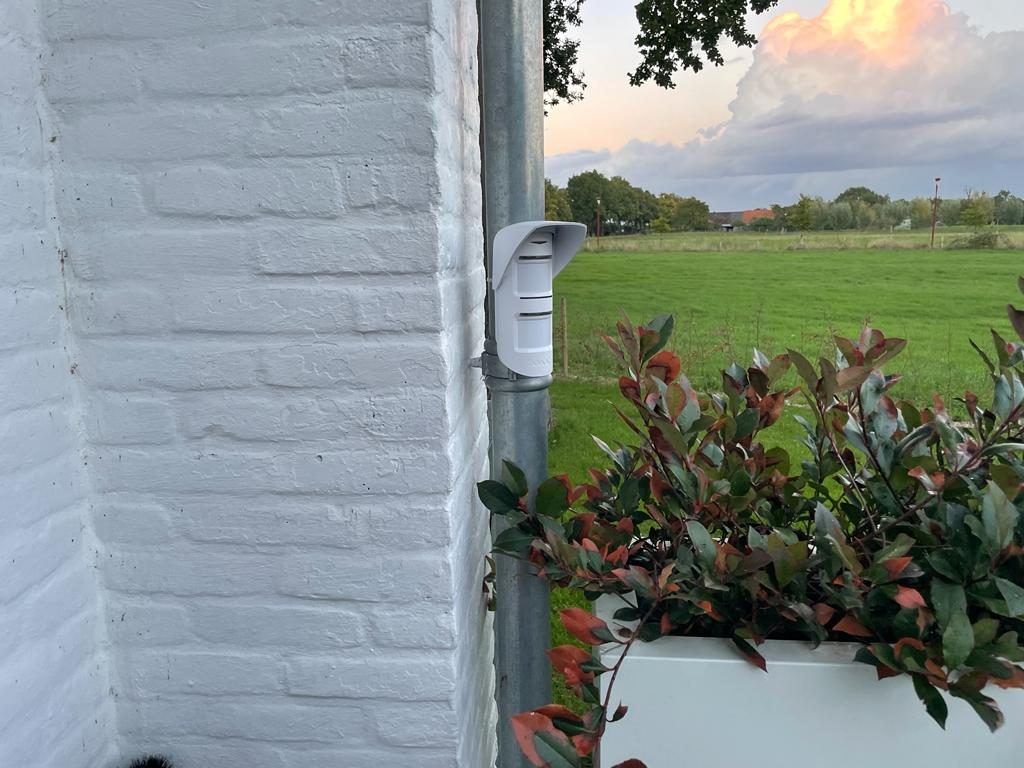
Detection outdoors reverses that. A detector on the facade notices someone on the property, the light comes on and you get a notification while the door is still shut. In practice people walk on. You do not have to do anything, and that is exactly the point.
“Outdoor detection is what people mean when they say they want to feel safe. Indoor detection is what they mean when they say they want to catch someone.”Our fitters, on this kind of job
Wireless for alarms, cables for cameras
One sentence, and it is the whole answer. People look for a single rule for the entire house, and there is not one.
| Alarm | Cameras | |
|---|---|---|
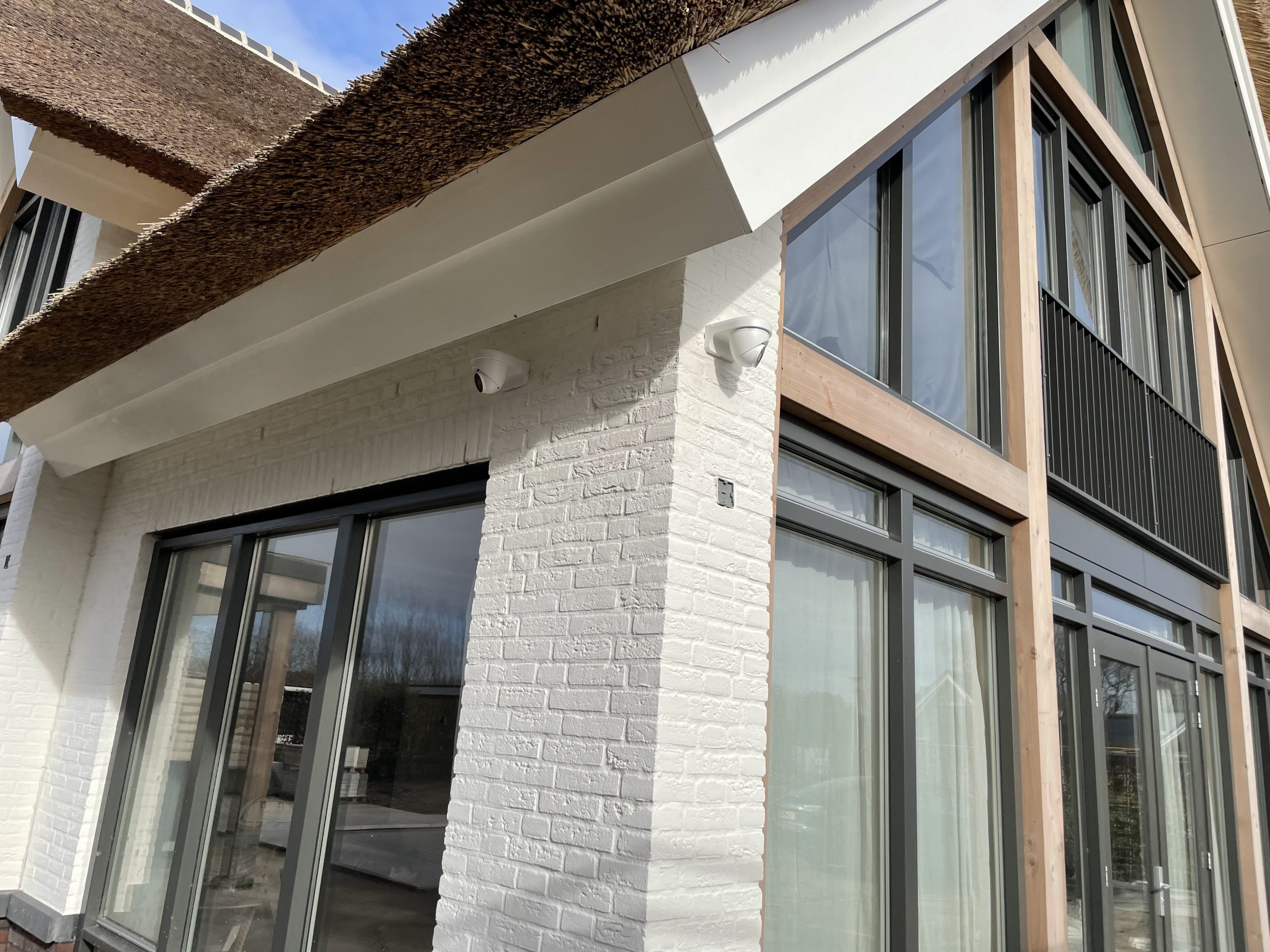
| Best choice in a finished house | Wireless | Cabled |
| Why | No channels cut into finished walls; batteries last years | Power and image over one cable; nothing to charge |
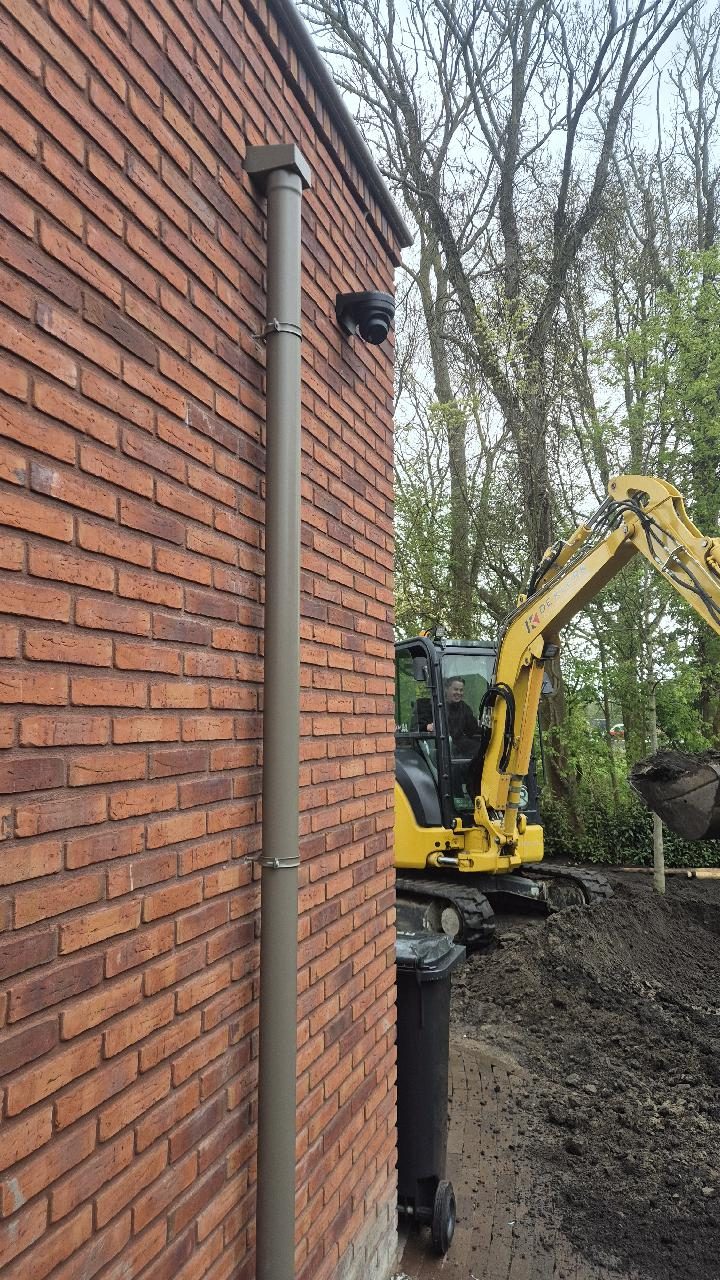
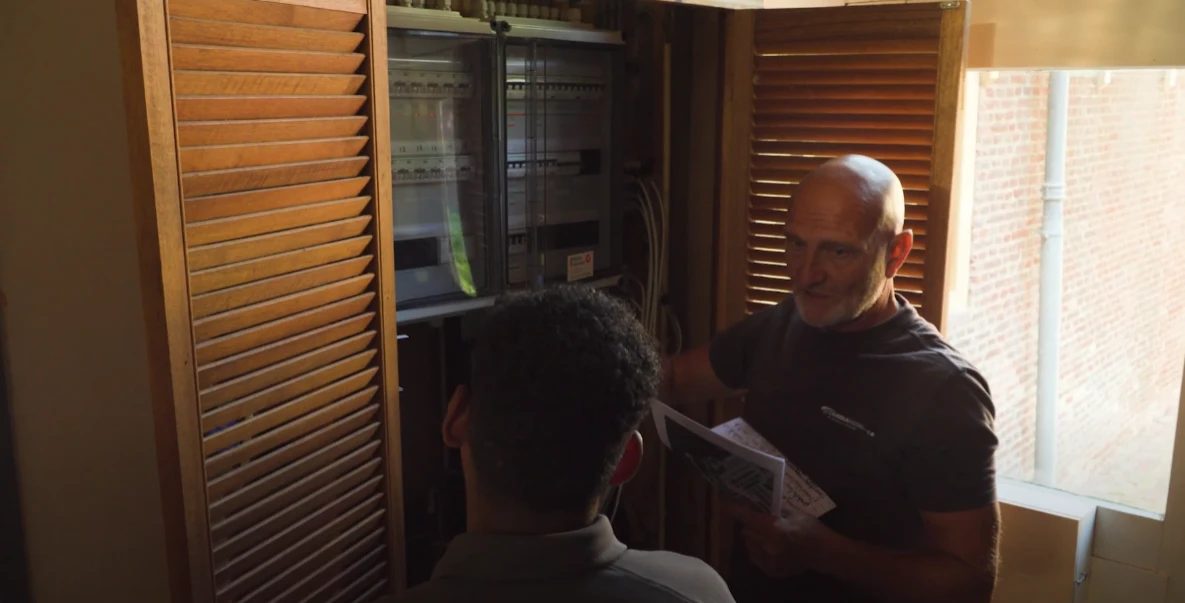
| Power | Batteries, reported automatically when low | Power over Ethernet from the meter cupboard |
| If the internet drops | Still detects and sounds | Still records locally |
| Adding more later | Simple — pair another detector | Needs a cable run, so plan it once |
| If you move | Largely comes with you | Cabling stays behind |
A house still being built is the exception: then run cables for both, because the walls are open anyway and it will never be this cheap again.
Monitoring centres, and why we do not push one
A monitoring centre is a staffed control room that receives your alarm and decides what to do. It is useful and it is a monthly cost, and plenty of homes do not need one.
- We connect to every monitoring centre in the Netherlands. You choose which one, and you can switch later without replacing your system. Companies that tie you to their own centre are solving their problem, not yours.
- Without one, the alarm notifies you and whoever you nominate. For most households that is enough, especially if a neighbour or family member can go and look.
- With one, someone acts when you cannot. Worth it if you travel a lot, or if nobody nearby can respond.
- It is a monthly fee, not a lock-in. Ask what happens to your system if you stop paying. With us, it keeps working — you just stop having a control room behind it.
What it costs
From €899, including 21% Dutch VAT and including installation by our own fitters. What you pay above that depends on the number of detectors and the size of the house.
The panel and the app
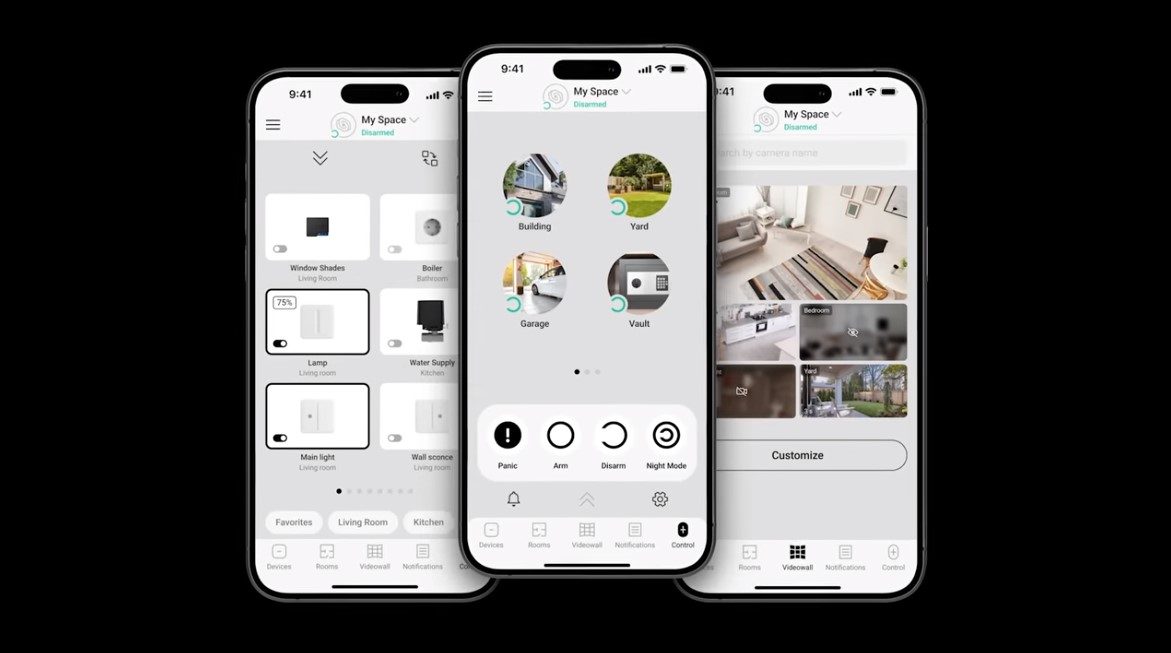
The heart of the system. One panel, however many detectors you add later.
Detectors, indoors and out
Door and window contacts, movement detectors, and outdoor detectors for the garden side. Which and how many is what the visit is for.
Smoke, heat and water detectors
These can join the same system, and in practice they go off far more often than the burglar alarm does. Smoke alarms are legally required in Dutch homes — see the smoke alarm law.
Setting it up with you
Included. Which detector notifies whom, at what times, and how you arm only the perimeter while you are inside.
Frequently asked
Do I need an alarm in the Netherlands?
Often not. Burglary here has fallen a long way, and for an ordinary home good lighting, decent locks and knowing who is at the door do more than a panel on the wall. An alarm earns its place when you are away a lot, when the house cannot be seen from the street, or when there is something specific inside worth protecting.
Is a subscription required?
Not with us. You buy the system and it is yours, and it notifies your phone directly. A monitoring centre is optional and costs a monthly fee. We connect to every monitoring centre in the Netherlands, so if you do want one you are not tied to a single supplier and you can switch later without replacing the system.
Wired or wireless?
For alarms, wireless — almost always. Modern wireless detectors have batteries that last years and report their own status, and you avoid cutting channels into the walls of a finished house. For cameras it is the other way round: there, cabling is better. That surprises people, and it is the single most useful thing to know.
Will it go off when I am at home?
Not if it is set up properly. You can arm only the perimeter while you are inside, so detectors at the doors and windows are live and the hallway is not. Getting this right at handover is what decides whether the system is still switched on in a year.
What about pets?
Say so before we quote. Detectors can be chosen and positioned so a cat or a dog does not set them off. This is a common reason people switch their alarm off and never switch it back on.
Can I take it with me when I move?
A wireless system, largely yes. That is one of the arguments for wireless if you are renting or expect to move within a few years. We will tell you at the visit which parts travel and which stay.
Read on

This page comes from our own installations at people’s homes across the Netherlands, not from a brochure. veiligergevoel.nl is the consumer brand of CameraInstallatie.nl, a security specialist since 1999. We speak English on site and on the phone.
Not sure whether you need one?
Then let us come and look first. If the honest answer is a light and a better lock, that is what we will tell you.