Smoke alarms are compulsory here. On every floor.
Since 1 July 2022, in every home in the Netherlands, including rented ones and including houses built decades ago. Plenty of people living here have never been told this, so here it is in plain English.
What the law says
Since 1 July 2022 every home in the Netherlands must have a smoke alarm on every floor, existing homes and rented homes included. Before that the requirement applied only to homes built from 2003. In a rented home the landlord is responsible for the alarms being there and working.
This changed quietly and it caught a lot of people out, Dutch and non-Dutch alike. The rule is simple enough.
| Detector | Where | Compulsory? |
|---|---|---|
| Smoke alarm | Every floor, on the escape route (hall, landing, attic) | Yes, since 2022 |
| Smoke alarm in a bedroom | By the door, not above the bed | No, but sensible |
| Heat alarm | Kitchen and garage — steam sets off a smoke alarm | No |
| Carbon monoxide alarm | Near a boiler, geyser, gas fire or open fire | Not in existing homes |
| Water detector | Under the washing machine, by the boiler, meter cupboard | No |
A smoke alarm does not belong in the kitchen or the bathroom. Steam is not smoke, but the detector cannot tell the difference — and after three false alarms somebody takes the battery out.
Where they actually go
- On the ceiling, in the middle of the room
At least half a metre from the wall, and not in a corner where the air stands still. Not beside a ventilation grille or an extractor fan.
- One on every floor, on the escape route
The hall downstairs, the landing, the attic. That is exactly what the law asks and also where it does the most good: the path you take to get out.
- A heat alarm in the kitchen
Not a smoke alarm. A pan that catches will set a smoke alarm off every time, and a disabled alarm protects nobody.
- Carbon monoxide at head height, not on the ceiling
Carbon monoxide mixes with the air rather than rising the way smoke does. Roughly eye level, a metre or two from the appliance.
- Test them, properly
When we fit them we test with smoke spray and, for water detectors, a wet finger. You see the alert arrive before we leave.
If you rent
This is the part that matters most to people who have moved here, because most newcomers rent first.
- The landlord is responsible for smoke alarms being present and working in a rented home. This is not optional and not a favour.
- If there are none, ask in writing. An email is enough. Keep it, so there is a record of when you asked.
- Do not remove or disable them. As a tenant you are expected to leave them in place, including replacing a battery if that is what the tenancy says.
- If nothing happens, you have somewhere to go. The Huurcommissie, the national rent tribunal, handles disputes between tenants and landlords and this is the kind of thing it exists for.
- You can add your own indoors. Battery alarms need no permission and no drilling into the facade.
What a connected alarm adds
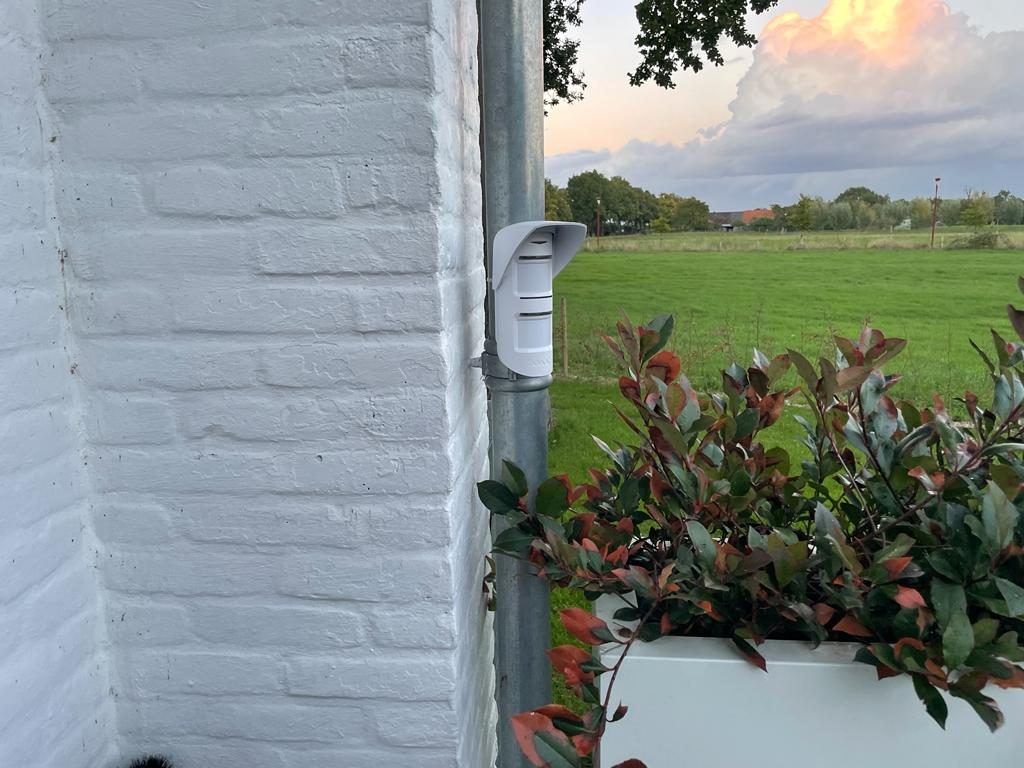
Standalone alarms have existed for forty years and they work — while you are at home.
| Standalone | Connected | |
|---|---|---|
| You are home | Beeps | Beeps, and every other alarm beeps too |
| You are out | Beeps in an empty house | Message on your phone |
| You are asleep upstairs, smoke in the kitchen | You may not hear it | Every alarm in the house sounds at once |
| Battery running low | Chirps at three in the morning | Notified in advance, and which one |
| Monitoring centre | Not possible | Possible, if you want it |
We connect to every monitoring centre in the Netherlands. It is optional and it costs a monthly fee — plenty of households choose the phone notification alone.
Connected alarms join the same panel as a burglar alarm, so there is no second system and no second app. If you have no alarm at all, they can also work on their own.
Water: the damage nobody sees coming
Not required by law, and in our experience the detector that earns its keep fastest. A burglary happens to most people never. A leaking washing machine hose happens to almost everyone once.
- Under the washing machine or dishwasher. The supply hose is the most common cause, and it starts as a drip.
- Beside the boiler. A boiler losing water does it slowly, often for weeks.
- In the meter cupboard. Frequently the lowest point in a Dutch home, and the cupboard you least want wet.
- Under the sink and behind the toilet. Traps and connections leak gradually, never suddenly.
Frequently asked
Are smoke alarms compulsory in the Netherlands?
Yes. Since 1 July 2022 every home in the Netherlands must have a smoke alarm on every floor, existing houses and flats included. Before that date the requirement applied only to homes built from 2003 onwards. It covers every storey on the escape route, so the hallway, the landing and the attic.
I rent. Whose responsibility is it?
The landlord is responsible for the alarms being present and in working order in a rented home. As a tenant you are expected not to remove or disable them. If your rented home has no smoke alarms, raise it with your landlord in writing — this is a legal requirement, not a request.
Where exactly should they go?
On the ceiling, in the middle of the room, at least half a metre from the wall and not in a corner where the air stands still. Not next to a ventilation grille or extractor. Not in the kitchen or bathroom: steam is not smoke, but the alarm cannot tell the difference. Use a heat alarm there.
Is a carbon monoxide alarm compulsory too?
Not in existing homes. Requirements do apply to new build and when a new combustion appliance is installed. Regardless of the rules: if you have a central heating boiler, a geyser, a gas fire or an open fire, fit one. Carbon monoxide has no smell.
What does a connected smoke alarm add?
That you hear it when you are not there. A standalone alarm beeps in an empty house. A connected one also sends a message to your phone, and makes every other alarm in the house sound at the same time — so smoke in the kitchen wakes you upstairs.
What is a water detector and do I need one?
A small unit that lies flat on the floor with two contacts underneath. Water between them triggers an alert. Not compulsory, and in our experience it goes off more often than the burglar alarm: a washing machine hose, a leaking boiler, a slow drip under the sink. In a Dutch home the meter cupboard is often the lowest point, and the worst place to get wet.
Read on

This page comes from our own installations at people’s homes across the Netherlands, not from a brochure. veiligergevoel.nl is the consumer brand of CameraInstallatie.nl, a security specialist since 1999. We speak English on site and on the phone.
Shall we check what you already have?
We walk past the detectors that are already there during the visit. If they work, they stay. We do not replace working alarms to turn them into a system.